

Sun Spots, Age Spots & Solar Lentigines
Sun spots are flat, well-defined brown marks that gradually develop on areas of the skin exposed to the sun. Also known as age spots, liver spots or solar lentigines, they are a common sign of cumulative sun exposure and become increasingly noticeable with age. Although usually harmless, sun spots can contribute to uneven skin tone and are often one of the more visible signs of sun damage.
Any pigmentation treatment begins with identifying the type of pigmentation present. Not every brown spot is a sun spot, and an accurate diagnosis is important before deciding how — or whether — it should be treated.
What Are Sun Spots?
Sun spots, medically known as solar lentigines, are areas of increased pigmentation that develop following repeated exposure to ultraviolet (UV) radiation.
They typically appear as:

Flat brown or tan spots

Clearly defined patches of pigmentation

Round, oval or irregularly shaped marks
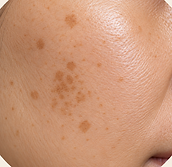
Individual spots or clusters of pigmentation
They most commonly develop on areas that receive the greatest cumulative sun exposure, including the:

Face

Arms

Cheeks and temples

Forehead

Shoulders

Hands

Chest and décolletage
Unlike freckles, which often become darker or lighter depending on recent sun exposure, solar lentigines tend to persist once they have developed.
What Causes Sun Spots?
Sun spots develop primarily as a result of cumulative ultraviolet exposure over time.
When the skin is exposed to UV radiation, melanocytes produce melanin as part of the skin's natural protective response. With repeated exposure over many years, melanin production may become uneven, resulting in localised areas of persistent pigmentation.
Factors that may contribute include:

Cumulative sun exposure

Previous sunburns

Frequent outdoor activity

Increasing age

Inadequate sun protection

Individual skin type and genetics
This is why solar lentigines are sometimes called age spots. However, ageing itself is not the sole cause — rather, they reflect the cumulative effects of UV exposure over time.

Freckles vs Sun Spots vs Melasma
Although freckles, sun spots and melasma may all appear as brown pigmentation, they are different conditions with different causes, behaviour and treatment approaches.
Freckles

Sun Spots / Solar Lentigines
Melasma
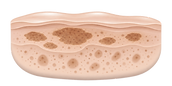


Small, light brown spots
Appearance
Cause
Common areas
Course
Treatment
Genetics and sun exposure
Face, shoulders and other sun-exposed areas
May fluctuate with sun exposure
Larger, well-defined brown spots
Cumulative UV exposure
Face, hands, arms, shoulders and chest
Tend to persist once developed
Hazy brown or grey-brown patches, often symmetrical
Hormones, UV exposure, heat and genetics
Cheeks, forehead, upper lip and chin
Chronic condition that may fluctuate or recur
Prescription Topicals ± carefully selected Laser or Light-based treatments
Usually requires a more conservative, long-term approach
Treatment approach
Generally responds well to lasers
May respond well to targeted pigment lasers
Why the distinction matters:
Different types of pigmentation respond differently to treatment. A treatment that is appropriate for freckles or a solar lentigo may not necessarily be appropriate for melasma. It is also possible to have more than one type of pigmentation at the same time, which is why accurate diagnosis is important before treatment.
Why Is It Important To Diagnose A Sun Spot Correctly?
Not every brown spot is a sun spot.
Before treating an individual pigmented lesion, particularly one that is new or changing, it is important to assess whether its appearance is consistent with benign pigmentation.
Medical assessment is particularly important if a spot:

Has recently appeared or changed

Bleeds, crusts or ulcerates

Is increasing rapidly in size

Is persistently itchy or symptomatic

Has an irregular shape or border

Looks noticeably different from your other pigmented spots
Where the diagnosis is uncertain, treatment may be deferred and further assessment recommended.

Sun Spot Treatment
Because solar lentigines are generally located relatively superficially within the skin, they may respond well to appropriately selected pigment laser treatments.
The Pigment Spot Laser uses a 532 nm wavelength with VSLS technology to target selected superficial pigmented lesions.
It may be considered when there are discrete, well-defined solar lentigines that would benefit from targeted treatment rather than treating the entire surrounding area.
A dressing is applied to the treatment area after and this is left on for 2 weeks.


Sun Spot Treatment Recovery Process
Recovery depends on the treatment used and the intensity of treatment.
After pigment-specific laser or light treatment, sun spots may temporarily:

Become darker

Develop mild redness or swelling

Form superficial crusting or a darker surface

Gradually fade or shed as the skin recovers
It is important not to pick, scratch or prematurely remove any crusting.
Not everyone will experience all of these changes, and expected downtime will be discussed before treatment.
How Many Treatments Will I Need For My Sun Spots?
The number of sessions required varies between individuals.
Some discrete solar lentigines may respond noticeably after a small number of treatments, while more extensive sun damage may require a series of sessions.
Factors influencing treatment response include:
Depth of Pigmentation

Additional or maintenance treatments may be recommended if pigmentation persists or new sun spots develop over time.
Can Sun Spots Come Back?

Treated sun spots may improve significantly, but treatment does not prevent future sun damage.
New solar lentigines can develop following continued UV exposure, and pigmentation may recur in previously treated areas.
For this reason, long-term sun protection is an important part of maintaining treatment results.
Additional or maintenance treatments may be recommended if pigmentation persists or new sun spots develop over time.

How Can I Prevent New Sun Spots?
Sun protection is part of your treatment too.
Daily habits can help reduce further UV damage and the development of new pigmentation:

Apply broad-spectrum sunscreen every day

Reapply sunscreen when outdoors for prolonged periods

Wear hats and sun-protective clothing

Seek shade during periods of intense sunlight

Avoid unnecessary prolonged UV exposure

Maintain a consistent skincare routine
Sun protection is particularly important after laser and light-based pigmentation treatments.
Skincare For Sun Spots
Do not underestimate the power of a daily habit.
Skincare may not remove every established solar lentigo, but it plays an important role in supporting treatment and reducing further pigmentation.
A routine may include:

Gentle cleansing

Daily broad-spectrum sunscreen

Appropriate moisturisation

Antioxidant skincare


Selected pigment-regulating ingredients
Retinoids where appropriate

Skin barrier support
The appropriate routine depends on your skin type, sensitivity and other treatments being performed.
Why Combination Treatment May Be Recommended
Sun spots rarely exist in isolation.
Skin with cumulative UV exposure may also show:

Freckles

Uneven pigmentation

Redness

Visible blood vessels

Changes in skin texture

Fine lines

Loss of collagen and elasticity
For this reason, treatment may be designed around the overall pattern of sun damage, rather than simply removing individual brown spots.
A personalised plan may combine skincare, sun protection and selected laser or light-based treatments according to what your skin actually needs.
Sun Spots FAQs
*This information is for educational purposes only and is not intended as a substitute for medical advice. We recommend a clinical consultation for a plan tailored to your unique anatomy.*
